A Mind-Expanding Chronicle of Memory, Lineage, Philosophy, and Sufi Civilisation
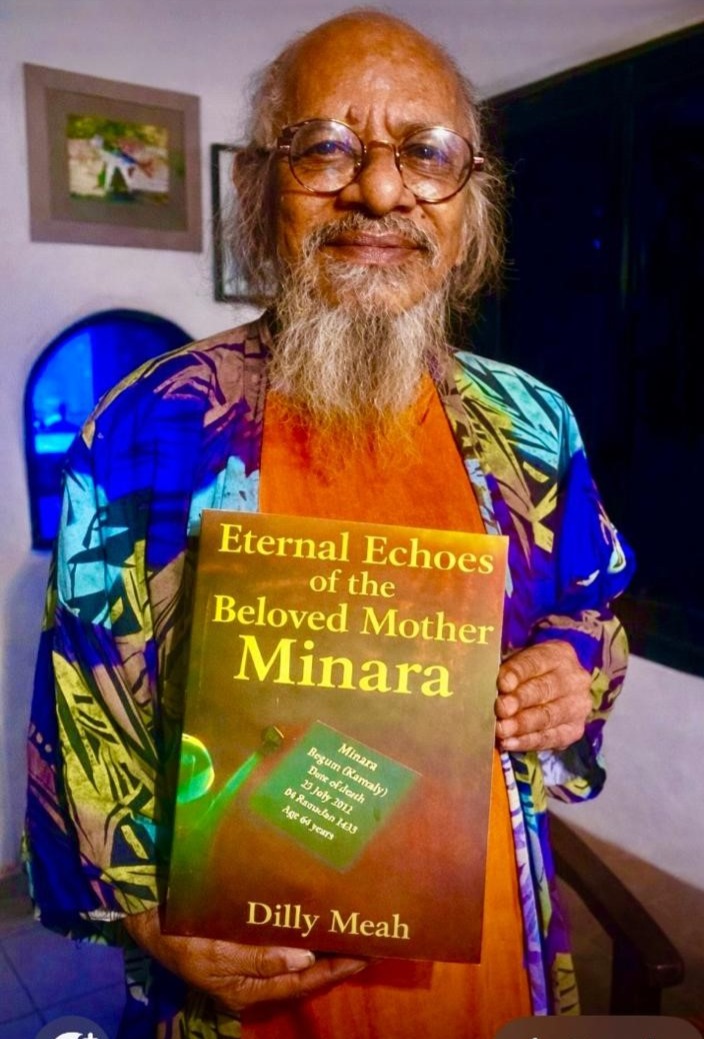

By Dilly Meah
In the landscape of contemporary writing—where narratives are often fragmented and memory reduced to anecdote—Eternal Echoes of the Beloved Mother Minara by Dilly Meah rises as a monumental work of synthesis. It is not simply a book; it is a layered intellectual construct were biography, spirituality, genealogy, and history are fused into a single, resonant continuum.
At the centre of this work stands Minara—a beloved sister, not a biological mother, yet elevated by the author into the مقام (maqām) of “Mother.” This metaphor is deliberate and profound. In Sufi epistemology, titles are not confined to biology but reflect states of spiritual influence. Minara becomes the axis of compassion, moral guidance, and emotional refuge—her memory transformed into a timeless archetype of nurturing presence.
The Architecture of Memory and Meaning
What distinguishes this book is its structural ambition. It does not move linearly; rather, it spirals—returning to memory, revisiting history, and reinterpreting both through the lens of spiritual consciousness. The narrative constructs a bridge between the intimate and the civilisational:
- Personal remembrance becomes collective heritage
- Family lineage becomes historical documentation
- Spiritual devotion becomes intellectual inquiry
This is a methodology rarely executed with such conviction.
Sylhet as a Spiritual Epicentre
The geographical and spiritual heart of the book is Sylhet—a region whose identity is inseparable from the arrival of Hazrat Shah Jalal (RA). The author situates Sylhet not merely as a place, but as a civilisational نقطة (nuqta)—a point of origin from which spiritual, cultural, and social transformations radiated across Bengal.
The narrative extends into the lineage of Hazrat Shah Kamal (RA), meticulously tracing twenty-six generations. This genealogical mapping is presented not as static ancestry but as a living chain of transmission—where land, spirituality, and identity intersect. The discussion of land grants, Inam systems, and agrarian structures further grounds this spiritual history in socio-political reality, giving the work unusual depth.
Historical Continuum: From Sultanate to Empire
The book demonstrates an impressive command of historical layering. It traverses:
- The Sultanate of Bengal and its administrative sophistication
- The Mughal imperial framework and its integration of regional elites
- The transformations under the East India Company
- The consolidation of power under the British Crown
Within this continuum, figures such as Paragal Khan—military commander under Sultan Alauddin Husain Shah—are not treated as isolated historical actors, but as nodes within a broader network of governance, patronage, and cultural production.
The Endorsement of Harold Rasheed Choudhury
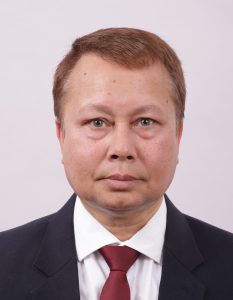
The intellectual and cultural significance of this work is powerfully affirmed by Harold Rasheed Choudhury, whose life itself embodies a convergence of aristocratic heritage, philosophical inquiry, and artistic sensibility.
Born into the distinguished landlord family of Sunamganj, Harold is the eldest son of Aminur Rasheed Choudhury and grandson of Abdur Rasheed Choudhury. His lineage is deeply embedded in the রাজনৈতিক (political) history of the region, with his grandfather serving in the Indian Legislative Assembly during 1934 and 1944—placing the family within the formal structures of late colonial governance.
His uncles, Humayun Rasheed Choudhury and Faruk Rashid Choudhury, further extend this legacy into the post-colonial political sphere. This continuum of public service is rooted in an earlier generation, most notably embodied by his grandmother, Begum Serajunnessa Choudhury.
Born on 27 November 1910 in Rajnagar, within the former province of Eastern Bengal and Assam under British India, she was the daughter of Dewan Abdul Halim Chowdhury, an influential zamindar (landlord) whose authority was both economic and social. She received a private education at home, studying Bengali, English, and Islamic disciplines—an intellectual foundation that later informed her public life.
Following the death of her husband in 1944, Begum Serajunnessa Choudhury assumed direct responsibility for managing the family’s zamindari estates and tea gardens. In doing so, she demonstrated not only administrative competence but also a continuity of aristocratic stewardship during a period of political and economic transition.
Her subsequent role as a member of the National Assembly of Pakistan, representing East Pakistan, reflects the evolution of that inherited responsibility into formal political participation. Through her, familial legacy was not merely preserved—it was rearticulated within the emerging structures of modern governance.
London, Music, and Intellectual Formation
Harold Rasheed Choudhury’s formative years in London during the 1970s and 1980s were crucial in shaping his worldview. Immersed in an environment of higher education and cultural plurality, he developed a philosophical outlook that bridges Eastern metaphysics and Western critical thought.
His engagement with music—particularly the guitar—is emblematic of this synthesis. He did not merely learn the instrument; he transformed it, developing a distinctive style that reflects improvisation, introspection, and individuality. Much like the author of this book, he approaches art not as replication, but as reinterpretation.
Philosophy of Loss and Existence
Perhaps the most profound dimension of Harold Rasheed Choudhury’s endorsement lies in his personal philosophy. Having lost his mother at birth, he perceives life itself as a gifted interval—an وجود (wujūd) shaped by absence. His belief that “everything exists for a reason, and when that reason is fulfilled, it disappears” resonates deeply with the thematic core of the book.
In Minara’s metaphorical elevation to “Mother,” he recognises a universal truth: that human beings reconstruct meaning through memory. The absence of a mother in his own life allows him to perceive, with rare clarity, the spiritual and emotional architecture the author has built around Minara.
A Patron of Thought and Cultural Preservation
Harold Rasheed Choudhury did not merely admire the book—he actively supported its promotion. His endorsement is not ceremonial; it is philosophical. He values works that:
- Preserve history beyond material gain
- Encourage intellectual reflection
- Connect spirituality with lived experience
In this sense, his role becomes integral to the book’s journey—transforming it from a personal manuscript into a recognised cultural contribution.
Why This Book Matters
Eternal Echoes of the Beloved Mother Minara is “mind-blowing” not because of stylistic excess, but because of its conceptual scale. It achieves what few modern works attempt:
- It restores memory as a form of resistance against historical erasure
- It integrates Sufi spirituality with documented history
- It redefines family narrative as civilisational discourse
- It transforms personal grief into universal philosophy
Final Reflection
In the final analysis, the endorsement of Harold Rasheed Choudhury is not incidental—it is symbiotic. His life philosophy, shaped by loss, inquiry, and reinterpretation, finds a mirror in the pages of this book.
And so, Eternal Echoes of the Beloved Mother Minara stands as more than literature. It is a testament that memory, when anchored in spirituality and illuminated by history, does not vanish—it echoes across generations, carrying with it the light of those who are gone, yet eternally present.
Meeting With Mufti A. S. Shamim
When my humble request first began its quiet journey, it was through the gracious and timely intervention of Harold Rasheed Choudhury that it found both direction and purpose. His presence in that moment was not merely supportive—it carried a composed dignity shaped by lineage, discernment, and a rare ability to harmonise intention with meaningful action.
There was a calm assurance in the way he responded, as though guided by an intuitive awareness of both the immediate need and its deeper, unspoken significance. What may have appeared, on the surface, to be a simple gesture of assistance gradually unfolded into something far more profound—an alignment of goodwill, trust, and purpose. Such moments are uncommon; they transcend the ordinary and leave behind a resonance that lingers well beyond the occasion itself.
Harold Rasheed Choudhury’s family has long occupied a distinguished position within the historical and cultural fabric of Bangladesh. Since the latter years of the British colonial era, they have been closely associated with the ownership and stewardship of several tea gardens—an enduring legacy reflecting both economic stewardship and a deep-rooted connection to land, labour, and community.
His lineage is intricately interwoven with the political evolution of the subcontinent. His grandfather, Abdur Rasheed Choudhury, served in the Indian Legislative Assembly from 1934 to 1944, a decade marked by intense constitutional deliberations and the gradual shaping of post-colonial futures. Within those chambers, where the destiny of millions was debated, the family stood as participants in a defining chapter of history—engaged in the formal mechanisms of governance at a time when the very identity of nations was being negotiated.
It is therefore unsurprising that when Harold Rasheed Choudhury stepped forward—as the grandson of Abdur Rasheed Choudhury and the eldest son of Ameenur Rasheed Choudhury—he did so with a natural grace and clarity of purpose. In arranging the meeting, he did far more than facilitate an introduction; he seemed to draw together threads of history, trust, and intention, weaving them into a moment that felt divinely guided rather than accidental. What emerged was not simply an encounter, but an experience imbued with a quiet sense of destiny—an orchestration subtle yet unmistakably profound.
It was not merely a meeting. It was a convergence of intention.
Through his thoughtful efforts, I was granted the honour of sitting with Mufti A. S. Shamim—a scholar whose presence embodies both the weight of sacred tradition and the gentleness of lived wisdom. From the very first exchange, it became evident that this was no ordinary conversation. His words carried clarity without harshness, depth without complexity, and warmth without formality.
He listened with a rare attentiveness—not merely hearing but perceiving. His responses were measured, insightful, and anchored in both knowledge and spiritual awareness. There was a luminous quality to his engagement, as though each word was offered with care, responsibility, and sincerity.
Mufti Shamim did not approach this work as a distant observer; rather, he embraced it as a custodian of its deeper spirit. His encouragement extended beyond polite affirmation—it became a source of strength. His reflections brought refinement. His belief instilled a heightened sense of responsibility. In his presence, the work was not only validated—it was elevated.
Harold’s initiative became the bridge. Mufti Shamim’s wisdom became the guiding light. And within that illumination, I found myself standing in humility—aware that such trust demands not only gratitude, but a renewed commitment to depth, clarity, and truth.
This book, therefore, has transcended its physical form. It is no longer merely a collection of words upon pages. It has become an echo of shared faith, a manifestation of collaboration, and a testament to hearts aligned in pursuit of something far greater than individual expression.
May such alliances continue to shape not only literature, but the living memory of a people. May they give rise to narratives that endure—not only in books, but in the unfolding story of history itself.
During the course of our conversation, I had the opportunity to inquire about a matter of deep historical and spiritual significance: the sacred relics traditionally believed to have been entrusted by Hazrat Shah Jalal (RA) to Hazrat Shah Kamal (RA). These relics—a sword, a prayer mat (janamaz), and a pair of wooden sandals (kharam)—hold immense symbolic and devotional value within the spiritual heritage of the region.
Without hesitation, Mufti A. S. Shamim explained that, according to longstanding family tradition, these relics have remained under the custodianship of the eldest son across generations. This practice, he noted, has been preserved with consistency and reverence over centuries, forming an unbroken chain of responsibility and trust.
As he spoke, he shared that these sacred items are presently under his own care, as he now holds the position of the eldest son within the family. His words were not spoken with pride, but with a quiet sense of duty—reflecting an awareness of the historical and spiritual weight entrusted to him.
According to the lineage preserved within their tradition, this custodianship can be traced back to the fourteenth century, when Mawlana Zia Uddin, then the eldest son of the family, was entrusted with their care. From that time to the present day, the principle has remained unchanged: the দায়িত্ব, the sacred responsibility, passes to the eldest son—ensuring continuity, preservation, and reverence across generations.
In this continuity, one witnesses not only the preservation of physical relics, but the safeguarding of a living tradition—one that binds past to present, and history to faith, in an unbroken and deeply meaningful lineage.
The writer, a descendant of Hazrat Shah Kamal Quḥāfah (RA) of Shaharpara, currently lives in London