Khaleda Zia: That Was Patriotic At The Knife Edge
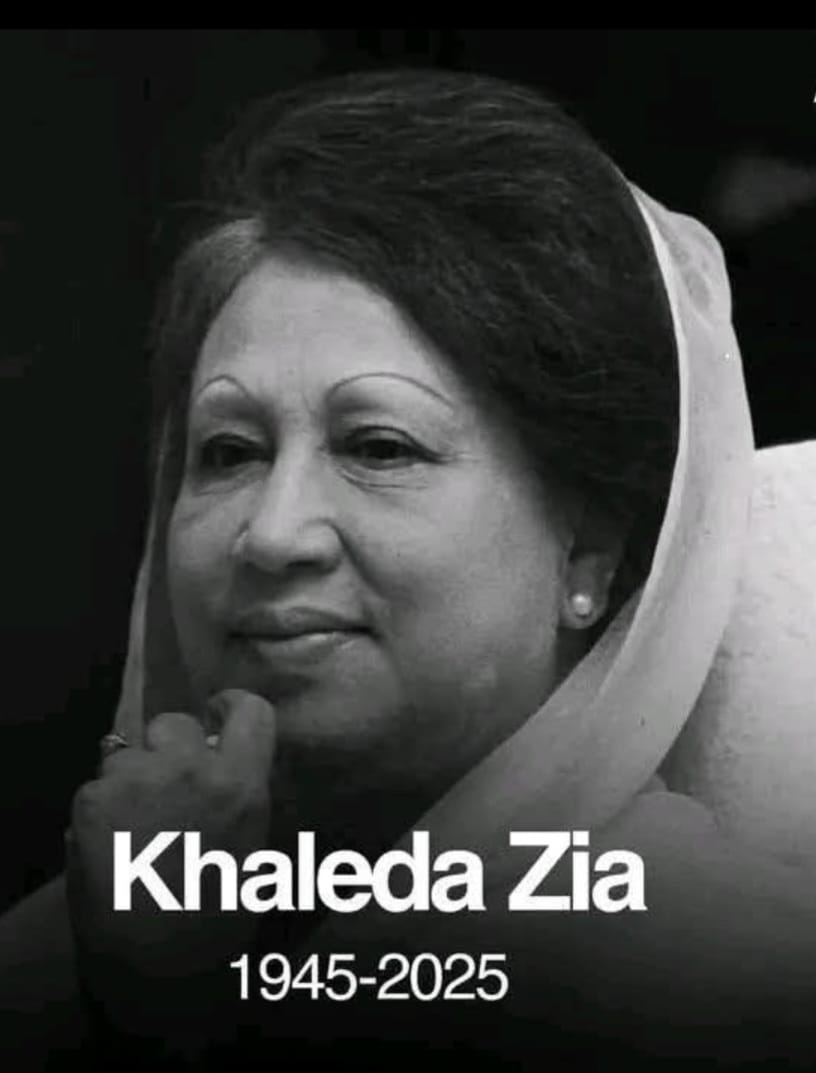

Allah (SWT) promised no one always a blue sky. It’s known the world over. But one single sight of an immaculate blue amber could linger in memory for ages to come. Khaleda Zia was fortunate enough to impart to us such a rare trait down the clouded firmament of Bangladesh. There were occasions she showed she loved the soil of Bangla like her own, and went on striving to find her best foot shaping that love, and did not stop when it cost her dearly.
This is not written as an ode. In our politics, praise is cheap and blame is plentiful. What interests me here is something narrower and harder: those few moments when, despite all the familiar flaws and contradictions of power, she chose to remain bound to this soil at significant personal cost. In a country still in its building phase, such choices carry a different weight.
How, then, do we measure it? In a much‑needed developing country, the prime metric is not only what a leader has given, the magnitude of her contributions in a ledger. It is also what she heartily wanted to give and fought against the odds for. Because the phases of developments are not identical as in a developed country. The geo‑social landscapes are fundamentally different, the pressures sharper, the margins thinner.
Growth factors of a developed setting are about progression, while a developing one needs building that requires intense and diverse dynamics to fight with obvious odds in the building phase. Institutions are still being shaped, norms are unsettled, tools are often improvised mid‑crisis. Thus, the shapes and makes demand different measures. A ruler cut for a settled Western capital cannot simply be laid across Dhaka and expected to make sense.
So, we cannot judge a developing nation’s leader Imran Khan and Donald Trump one is roaming to make his great again. He needs no stronger Swiss‑knife than his rich government system and country. And one is deteriorating in jail because he still in the early phase, needs to build that capable tool. They inhabit different stages of statehood, lean on very different reserves of institutional strength, whether we admire them or not.
This is a fair lens to measure success of a developing nation. And in this scale Khaleda Zia was able to show a remarkable prowess. Not as an all‑rounder who excelled in every area, but as someone who, at key junctures, chose not to detach herself from the fate of her own republic, even when detachment was made seductively easy.
Besides, there are examples that we can see. When the regime that came up with the popular Minus‑Two formula – it needs no introduction – she was offered lucrative stake just to leave Bangladesh, but she firmly stood for her soil. Purely for the motherland that’s patriotic. She showed it at the nick of time, at the face of knife edge, when a quieter life abroad could have been secured with a signature.
That single trait does not settle every debate about her record, nor is it meant to, but it does mark a rare strand of resolve in a political culture where fleeing the storm has so often seemed easier than riding it out. Bangladesh needs that more. We know why.
Shofi Ahmed is a writer, poet, journalist and former editor of Bangla Mirror newspaper